
Ice storms, summer thunderstorms, and the occasional hurricane remnant all knock out power in Forsyth and Davie County. A generator only helps if it is connected safely. We wire standby generators and portable generator hookups for Winston-Salem area homes, including transfer switches, panel interlock kits, and exterior inlet boxes, and we pull the permit and schedule the inspection ourselves.
- StandbyWiring and transfer switch for permanently installed units
- PortableInlet box plus interlock kit or manual transfer switch
- PermitsWe pull the permit and schedule the inspection
- LicensedNC Electrical Contractor #SP.SFD.39353
Standby Generators and Automatic Transfer Switches
A standby generator sits outside on a pad, runs on natural gas or propane, and starts on its own when the utility fails. The electrical heart of that system is the automatic transfer switch: it senses the outage, signals the generator to start, and moves your house (or selected circuits) from utility to generator power, then back again when the grid returns.
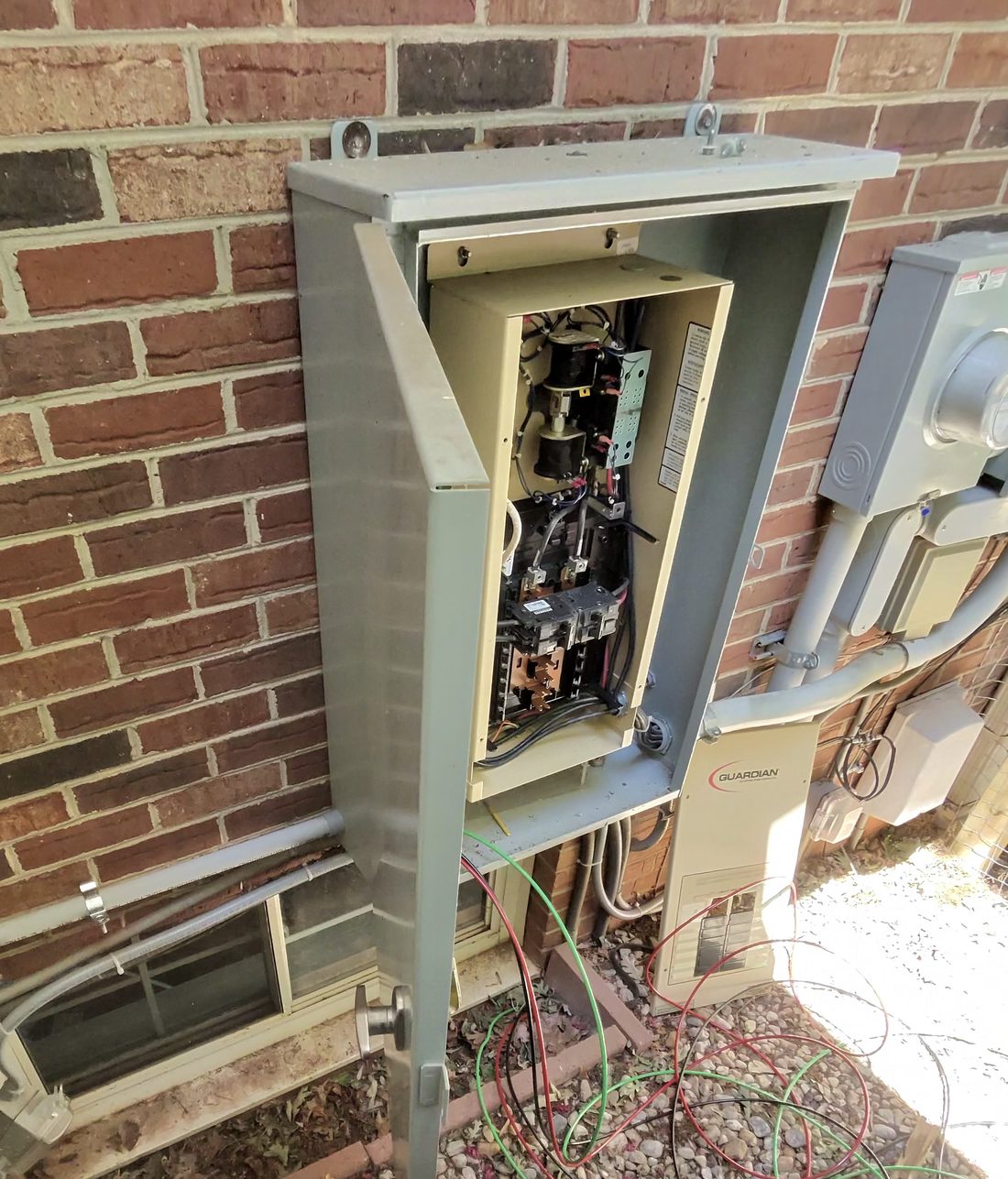
The photo on this page is one of our installs in the Triad: transfer switch mounted beside the meter on a brick home, with the control and load conductors being landed. We size the transfer switch to the service, decide with you whether to back up the whole house or a dedicated set of essential circuits, and coordinate the electrical work with whoever is setting the unit and running the gas line.

Portable Generators: Inlet Box and Interlock Kit
If you already own a portable generator, you do not need a standby system to use it safely. We install a weatherproof power inlet on the exterior wall and connect it to your panel through either a listed interlock kit or a manual transfer switch. In an outage you roll the generator out, plug one cord into the inlet, flip the interlock, and turn on the circuits you want: refrigerator, furnace blower, well pump, lights, and a few receptacles.
An interlock is a mechanical slide plate that makes it physically impossible to have the main breaker and the generator breaker on at the same time. It is usually the most economical option when your panel accepts a listed kit; a manual transfer switch is the alternative when it does not.

Sizing: What Do You Actually Need to Run?
Generator size is a load question, not a guess. Well pumps, central air, electric water heaters, and ranges have large starting or running loads; refrigerators, gas furnace blowers, lights, and internet equipment are modest. We walk through what matters to your household during an outage and help you match the generator and transfer equipment to it, the same way we run load calculations for panel upgrades and EV chargers.
If your panel is old, full, or failing, it is often smart to address that before or alongside the generator hookup so the transfer equipment is landing on sound equipment.

Permits, Inspection, and Safe Operation
Generator connections require an electrical permit and inspection in North Carolina. We handle both, and when the work is done we show you how the system operates: how to start and connect a portable unit, how the interlock or transfer switch works, and which circuits are covered.
Generator work pairs naturally with whole-home surge protection, since switching events and storms are exactly when surges happen. In rural parts of Davie and Forsyth County where we also wire outbuildings and well houses, keeping the well pump on the generator is often the top priority.

Planning Before the Next Outage
The worst time to plan a generator connection is during an outage. Permits, equipment, and inspection take time, so the best moment to set this up is on a calm week before storm season. Start by deciding which approach fits your household: a portable generator with an inlet and interlock is an economical way to keep essentials running, while a standby generator with an automatic transfer switch takes over without anyone having to be home.
Next, list what you truly need during an outage. Most households want the refrigerator and freezer, heat (gas furnace blower or a heat pump on a large unit), a well pump if you have one, some lights, internet, and phone charging. Medical equipment moves to the top of the list. That list drives the generator size, the transfer equipment, and which circuits get connected.
Finally, think about placement. Generators need clearance from windows, doors, and vents so exhaust stays out of the house, and portable units should never run in a garage, even with the door open. We will help you pick a practical inlet location near where the generator will sit, and run the wiring so the setup is as simple as possible on a dark, wet night.


Frequently Asked Questions
Do I need a transfer switch to use a portable generator?
To connect a generator to your home's wiring, yes: you need a transfer switch or a listed panel interlock kit with an inlet box. Running extension cords to individual appliances is the only safe alternative without one.
What is a generator interlock kit?
A mechanical plate on your panel that prevents the main breaker and the generator breaker from being on at the same time. It lets you feed selected circuits from a portable generator through an exterior inlet without risk of backfeeding the utility line.
Can you wire a standby generator for my whole house?
Yes. We install and wire the automatic transfer switch and can set it up for the whole service or a group of essential circuits, depending on generator size and your priorities.
Do generator hookups need a permit in North Carolina?
Yes. Generator connections require an electrical permit and inspection. We pull the permit and schedule the inspection as part of the job.
Is it safe to backfeed through a dryer outlet?
No. It can energize the utility lines and endanger line workers, and it bypasses your panel's protection. A proper inlet with an interlock or transfer switch is the safe, code-compliant way.
Other Services We Provide


Areas We Serve
We provide generator installation and transfer switch wiring in Winston-Salem and across the Triad. See what we do in your town:
Request a Free Quote
Call 336-283-6290, email ampedupinfo@yahoo.com, or send the form below. We respond fast, usually the same day.